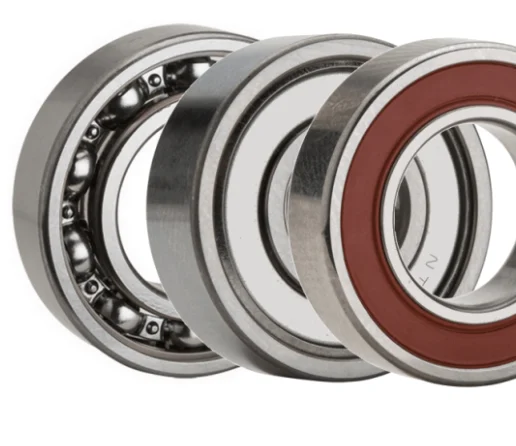
Shield or Metal Seals

Shields and metal seals are vital components used in bearings to provide a physical barrier against contaminants and retain lubrication within the bearing assembly. These seals are commonly constructed from metal materials and are designed to protect bearings from various external elements, ensuring optimal performance and longevity.

Shield Design

Non-Contact Shields (ZZ): Shields, often denoted as ZZ in bearing designations, are typically metal plates that do not make direct contact with the inner bearing ring. They act as non-contact seals and are designed to provide a physical barrier against larger particles, such as dirt, dust, and debris. The space between the shield and the inner ring allows for some ventilation but may not prevent finer contaminants from entering. 

Metal Seals (2RS)

Contact Seals (2RS): Metal seals, indicated as 2RS in bearings, involve a more direct contact with the inner bearing ring. These seals are designed to create a tighter barrier against contaminants compared to shields. They often utilize a rubber or synthetic material coating to enhance the seal’s effectiveness by reducing the gap between the seal and the inner ring, providing better protection against both larger and finer particles. 

Shield Design

  • Shields are typically made of metal and fit into a groove on the outer ring of a bearing.
  • They do not make direct contact with the inner bearing ring.
  • Shields act as non-contact seals, providing a physical barrier against larger particles such as dirt, dust, and debris.
  • While they allow for some ventilation, they may not prevent finer contaminants from entering.
  • Shields are denoted as ZZ in bearing designations.


Metal Seals (2RS):

  • Metal seals, indicated as 2RS in bearings, involve direct contact with the inner bearing ring.
  • These seals create a tighter barrier against contaminants compared to shields.
  • They often utilize a rubber or synthetic material coating to enhance effectiveness by reducing the gap between the seal and the inner ring.
  • Metal seals provide better protection against both larger and finer particles1.
  • Contaminant Protection: Shields act as a protective barrier against larger particles, reducing the risk of external elements entering the bearing.
  • Lubrication Retention: Both shields and metal seals help retain lubricant within the bearing, ensuring smooth operation and reduced friction.
  • Environmental Protection: Bearings operating in diverse environments rely on seals to maintain functionality and reliability.