

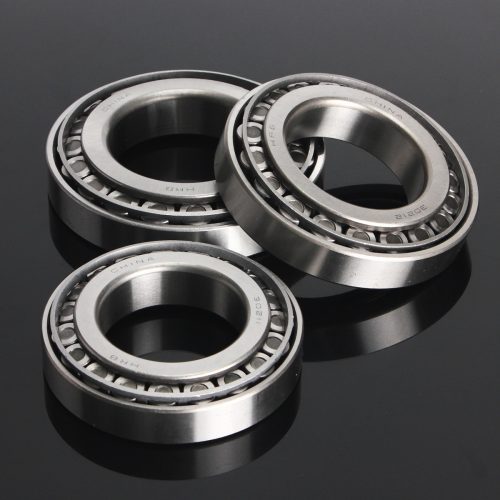
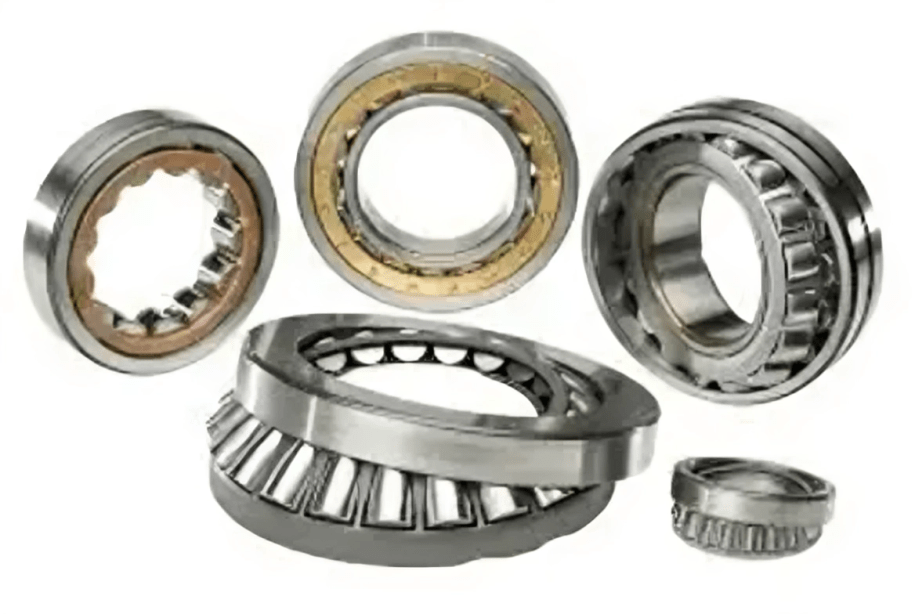
Roller bearings consist of an inner race, an outer race, rolling elements (rollers), and a cage (retainer) that holds the rollers in place. The inner race fits onto a shaft, while the outer race is mounted in a housing. The rolling elements roll between the races, minimizing friction.
Types of Roller Bearings:
- Cylindrical Roller Bearings: These have cylindrical rolling elements and are suitable for radial loads. They can handle moderate axial loads as well.
- Tapered Roller Bearings: These have tapered rolling elements and are designed to handle both radial and axial loads. They are commonly used in automotive wheel hubs.
- Spherical Roller Bearings: These have spherical rolling elements and can accommodate misalignment. They are ideal for heavy-duty applications.
