Labyrinth Seals

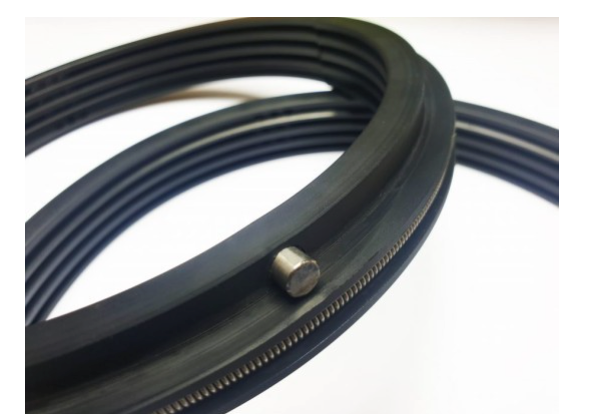
A labyrinth seal is a type of mechanical seal that functions based on a fundamental principle: it presents a complex path for fluid or gas to navigate through, ultimately reducing leakage. These seals are commonly used in various engineering applications, including engines, compressors, and pumps.

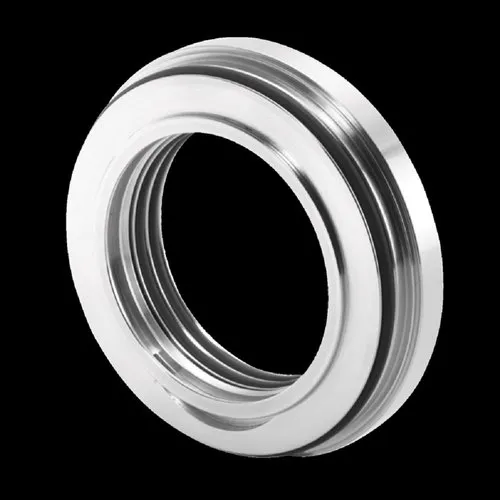
Labyrinth seals consist of many straight grooves that press tightly inside another axle or hole. These grooves create a long and intricate path for the fluid or gas to escape.

Sometimes, screw threads exist on the outer and inner portions of the seal. These interlock to produce the characteristic labyrinth path, which effectively slows down leakage.

  • Labyrinths are frequently used in gas turbines and engines. They serve multiple purposes, such as sealing air and hot gas in the main gas flow and sealing oil/air mixtures in bearing chambers.
  • The effectiveness of a labyrinth seal depends not only on the size and geometry of the clearance gap but also on the surface structure of the coating on the housing and stator. Factors like thermal conductivity and roughness of coatings affect heat transmission and thermal transfer.
  • Labyrinth fins are usually found on the rotating labyrinth part. They help slow the circumferential flow in the labyrinth chambers, minimize rotor heating during rubbing, and reduce leak flow.
  • Gas turbines: Labyrinth seals prevent hot gases from escaping between rotor and stator components.
  • Compressors: They maintain efficiency by minimizing air leakage.
  • Pumps: Labyrinth seals prevent fluid leakage along the shaft.
  • Bearings: They protect bearings from contamination and maintain lubrication.