Ball Bearing

Ball bearings play a crucial role in various industries, enabling machines to transmit motion while minimizing wear and friction. These bearings use balls to maintain separation between the bearing races and support both radial and axial loads.

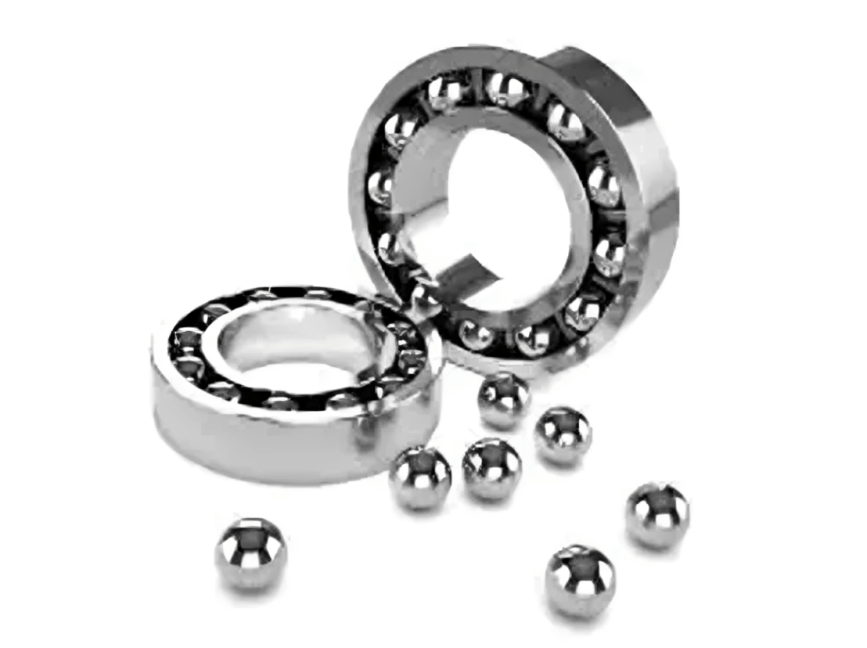
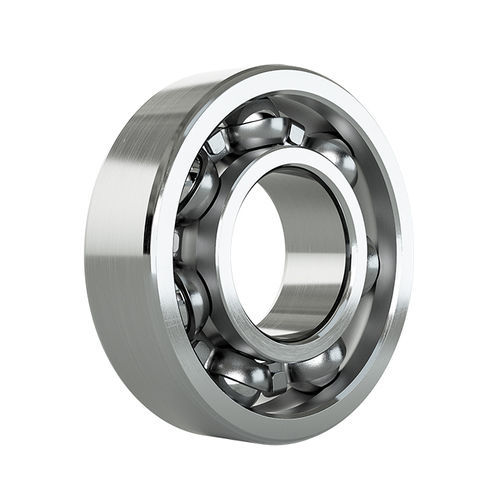
Ball bearings consist of four main components:

  • A large outer ring (stationary outer raceway)
  • A smaller inner ring (rotating inner raceway) attached to the shaft
  • Rows of balls trapped between the raceways of the two rings
  • A cage or separator that keeps the balls from touching each other.

The concept behind ball bearings is that rolling elements (such as rows of balls) produce less friction than sliding elements. When the inner ring rotates, the balls roll around the inner raceway while the outer ring remains stationary. This allows for rotational movement with minimal friction, making ball bearings ideal for high-speed applications.

Types of Ball Bearings: Deep Groove Bearings, Axial Bearings, Radial Bearings, Angular Contact Bearings.

  • Low Friction: Ball bearings minimize friction due to rolling contact between the balls and raceways. This efficiency is crucial for smooth operation and energy conservation.
  • High Load Capacity: Despite their compact size, ball bearings can handle significant radial and axial loads.
  • Precision: Ball bearings are manufactured with tight tolerances, ensuring consistent performance.
  • Variety: There are various types of ball bearings, each designed for specific applications (e.g., deep groove bearings, angular contact bearings, thrust bearings, etc.).
  • Automotive Industry: Ball bearings are used in wheel hubs, transmissions, engines, and steering systems.
  • Industrial Machinery: They play a vital role in conveyor systems, electric motors, pumps, and gearboxes.
  • Aerospace: Ball bearings are essential for aircraft engines, landing gear, and control surfaces.
  • Household Appliances: From washing machines to ceiling fans, ball bearings enhance the performance of everyday appliances.
  • Medical Equipment: Precision ball bearings are used in medical devices, such as MRI machines and surgical tools.
  • Construction and Heavy Machinery: Cranes, excavators, and bulldozers use ball bearings for durability and load-bearing capacity.